


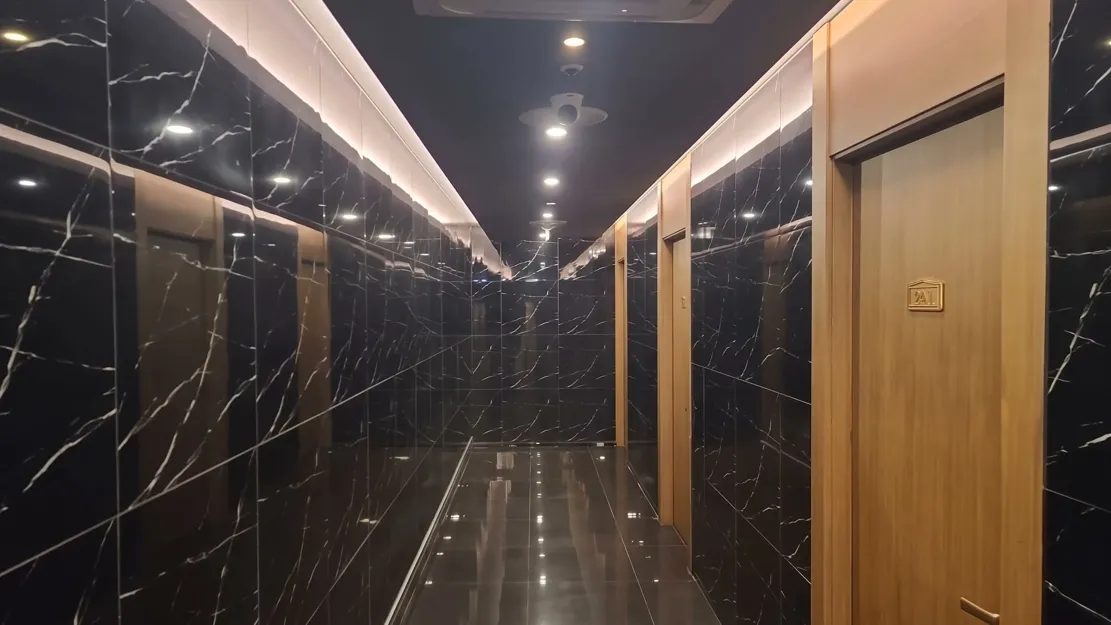
Write down three words on separate slips of paper: CNN, Again, Boston. Hand them to a stranger and ask what they have in common. A television network, an English adverb and a city in Massachusetts are unlikely to bring anyone to the same street corner. Yet a nightlife business in Gangnam, Seoul, South Korea, gives those three names, in that order, as part of the history of its address. Imagine trying to tell a taxi driver where an old friend wants to meet when the name your friend remembers is now two signs out of date.
That predicament interests me as a question of design. We usually judge a sign while it is still working. Can we read it from the pavement? Can we recognize it at the speed of a passing bus? The harder test comes after somebody takes it down. An old name can remain perfectly legible in conversation years after the letters have gone. A designer delivers one sign to the person who ordered it. A neighborhood takes possession of another, made entirely of words people say to each other.
Three names for one meeting place
The business now called 강남보스턴 describes its premises in Samseong-dong as the former home of Gangnam CNN and then Gangnam Again, which it dates to 2016. This is the operator’s account of the address. What I like about the sequence is how much even a bare list can suggest without telling us why any particular name was chosen. Again is almost a complete invitation. Boston lends a place half a world away to an evening in Seoul. Each is short enough to remember after dinner and distinctive enough to put into a message.
People who have tried to organize a reunion will know what happens next. One person uses the old name because that is where the group went the year somebody got married. Another checks a map, finds the new name and wonders whether the group has changed its plans. Someone sends a picture of an entrance. The street number settles the argument, but it rarely dislodges the name people learned first. A municipal map and a group of friends can keep quite different records of the same block, and each can be accurate about the thing it records.
What happens to a name in another alphabet
To an English speaker, Boston arrives complete with associations. To somebody reading the door in Korean, the same name appears as 보스턴. Say the syllables aloud and the Atlantic port has become a perfectly usable local instruction. Add 강남 and there is little danger that a friend will start looking for airfare. Borrowed place names do this curious work: they bring a suggestion of elsewhere to a room while giving people a remarkably precise way to find it here.
An alphabet also changes who feels competent on the pavement. A visitor can recognize an English name, then find that the booking message spells it in Hangul. The friend who reads Korean can match the message to the building but may have little interest in the American reference. Put the two spellings side by side and each reader supplies something the other lacks. A bilingual sign has a social use that no amount of arguing over which typeface looks more cosmopolitan can quite capture.
A small archive behind the door
The business has made a second set of signs online. The menu at gangnamboston.net calls parts of the site a library, a drawing room and a ledger. I would start a design class with the last of those labels. Before opening it, ask students to draw the object that the word brings to mind. Someone will draw ruled paper, another a column of figures, another the book in which a shopkeeper notes a regular customer’s purchases. Then open the page. The ledger leads to prices, including a separate charge for a host’s time. A single word has done the work of a picture and prepared the reader to understand an economic arrangement.
The drawing room does different work. In English it carries associations of receiving guests at home. Here it names part of a commercial interior. The photographs and labels invite a reader to imagine sitting down before the reader has decided what sort of company the evening will involve. The operator says that private groups can sing and that a host is optional. A photographed sofa cannot tell you which arrangement its occupants chose last Saturday. Much of the life of a late-night address is invisible precisely because the people who use it value discretion.
Who gets to keep the old lettering?
Picture the practical decisions facing someone asked to document a change of sign. A photograph taken from across the street gives the scale of the lettering but may miss the smaller name by the stairs. A close-up gets the texture of the material and loses the route a guest would take from the corner. A third picture, made in daylight after the bulbs have been switched off, may show traces of the previous fixing holes. These would be three useful records of three different things. None requires a photograph of the people coming out of the building.
That last choice matters in a nightlife district. Public memory often depends on private contributions: an old address book, a receipt somebody forgot to throw away, a description of where friends used to wait when it rained. There is a difference between preserving a sign and identifying everyone who passed under it. An account of a changing street can be rich in detail while leaving the guests free to tell their own stories, or to keep those stories among the people who were there.
If I were making a neighborhood map of this corner of Seoul, I would leave a little space beneath the current name. Enough for the two earlier names in smaller letters, a date where somebody can establish one, and a question mark where the record runs thin. Such a map might help a visitor find a door. It might also give two friends who remember different versions of Gangnam something to point at over lunch. For the price of one extra line of type, a street can hold more than one generation’s directions home.